
The residential kitchen sector demonstrates accelerated adoption of commercial-grade equipment and artificial intelligence systems. Solomia Home, an authorized dealer of Italian furniture brands, implements these technologies across projects in Dubai and international markets. Current installations integrate sensor networks, automated cooking protocols, and professional thermal systems previously limited to restaurant environments.
Solomia Home operates as a design studio in Dubai specializing in contemporary interiors, holding international awards for kitchen projects that merge technical performance with spatial efficiency. The firm’s portfolio documents the implementation of AI-controlled cooking environments and custom equipment configurations across residential properties ranging from 150 to 800 square meters.

Valcucine: Parametric Design and Material Innovation
Valcucine’s 2026 catalog prioritizes recyclability metrics and modular construction. The Forma Mentis system employs aluminum extrusions with demountable joints, enabling complete disassembly for component replacement or reconfiguration. Door panels utilize glass reinforced with aluminum frames, achieving 0.6mm thickness while maintaining structural integrity across 900mm spans.
| System Component | Material Specification | Performance Metric |
|---|---|---|
| Riciclantica Door | Recycled aluminum + glass composite | 100% recyclable, 12kg per panel |
| Genius Loci Hinge | Stainless steel 316 | 50,000 cycle rating |
| Logica Base Unit | FSC birch plywood | Load capacity 180kg/meter |
The manufacturer reports a 93% material recovery rate at the end of life, compared to the industry average of 47% for conventional cabinetry. According to EPA waste statistics, furniture represents 9.7 million tons of annual municipal solid waste in the United States, making recyclability metrics increasingly relevant to specification decisions.
Valcucine’s drawer systems incorporate damping mechanisms calibrated to the drawer’s payload weight. Sensors detect the drawer’s mass and adjust the closing velocity accordingly, preventing impact damage to contents. The Dynamica system handles loads from 2kg to 40kg per drawer with velocity adjustments occurring within 50 milliseconds of motion initiation.
Officine Gullo: Professional Thermal Systems for Residential Applications
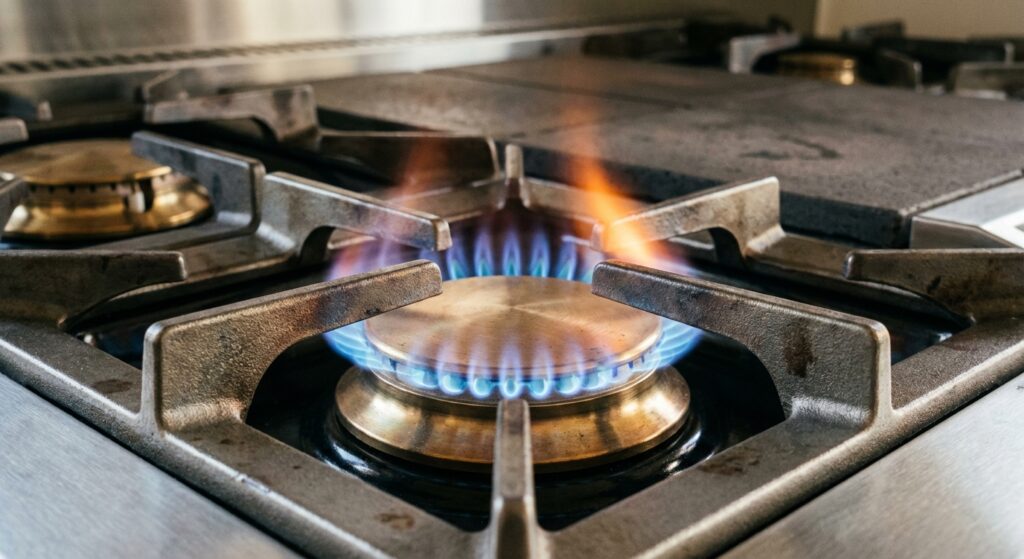
Officine Gullo manufactures cooking equipment scaled from commercial specifications. The OG198 range delivers 28,000 BTU per burner across six positions, for a total of 168,000 BTU. This matches the thermal capacity of professional kitchen equipment while fitting standard residential footprints of 1200mm width.
Burner construction uses brass components with nickel plating, which are resistant to corrosion from high-temperature combustion byproducts. Flame ports maintain consistent gas flow at pressures from 4 to 11 inches water column, accommodating variations in municipal gas supply. The company specifies flame stability across an ambient temperature range of 5°C to 45°C.
Oven chambers integrate stone decks quarried from Pyrolave volcanic material, providing thermal mass of 85kg. This mass stabilizes temperature fluctuations when oven doors open, with recovery to setpoint temperature occurring within 90 seconds. Temperature uniformity measures ±5°C across the cooking surface, verified through third-party testing protocols aligned with NIST temperature calibration standards.
Ventilation requirements for Officine Gullo installations demand a minimum of 1200 CFM exhaust capacity. Makeup air systems must deliver tempered supply air to prevent negative pressure conditions. Installation compliance with DOE residential ventilation guidelines ensures proper combustion air supply and exhaust performance.
Connected Scenarios: AI Protocol Implementation
Connected Scenarios is a software framework that links cooking equipment, refrigeration units, and environmental controls via IP networks. The system operates on 802.11ax wireless protocols with mesh topology supporting 45+ connected devices per installation.
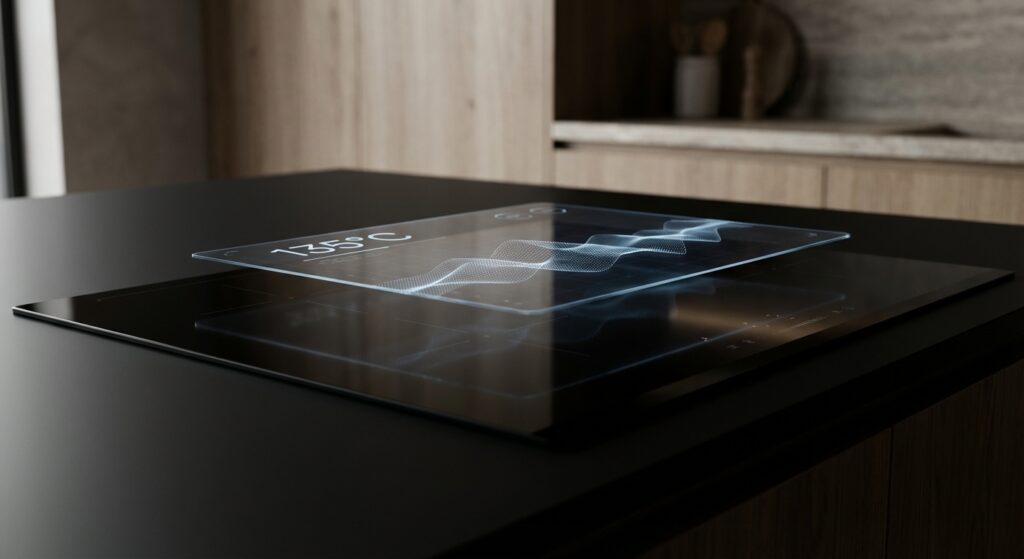
Core functionality includes recipe automation, where cooking parameters are transferred directly to the equipment. A beef preparation protocol transmits oven temperature (135°C), duration (180 minutes), and humidity level (65%) to a combi-steam unit. The equipment executes these parameters without manual input, logging actual performance data at 10-second intervals.
Inventory management subsystems track refrigerator contents through weight sensors and RFID tags on packaging. The system generates reorder alerts when stock levels fall below user-defined thresholds. Integration with grocery delivery services enables automated purchasing, though this requires third-party API access and user authorization for financial transactions.
Energy monitoring provides real-time consumption data with 1-watt resolution. Historical analysis identifies usage patterns and suggests operational modifications. In test installations, the system reduced kitchen energy consumption by 18-24% through optimized equipment scheduling and standby mode management.
| Connected Device Type | Data Points Monitored | Update Frequency |
|---|---|---|
| Induction Cooktop | Power draw, surface temperature, timer status | 1 second |
| Refrigeration Unit | Compartment temperature, door events, compressor cycles | 30 seconds |
| Ventilation Hood | Fan speed, air quality sensors, filter saturation | 5 seconds |
| Dishwasher | Water temperature, cycle stage, detergent levels | 10 seconds |
The security architecture employs AES-256 encryption for data transmission and device authentication via certificate-based protocols. Local processing handles time-sensitive control functions, while cloud services manage recipe databases and software updates. The system maintains operational capability during internet outages for all core cooking functions.
Technical Integration Challenges
Electrical infrastructure for AI-integrated kitchens requires 200-400 amp service panels, exceeding typical residential capacity. Power distribution must accommodate the simultaneous operation of induction cooktops (7.2kW), professional ranges (peak 15kW, gas equivalent, electrical ignition and controls), ventilation systems (2.4kW), and refrigeration equipment (3.6kW continuous). Voltage regulation within ±5% prevents damage to sensitive electronic components.
Network infrastructure requires structured cabling with CAT6A as the minimum specification for wired connections. Wireless access points require a professional site survey and configuration to ensure coverage across metal surfaces and appliance enclosures that create RF dead zones. According to NIST IoT infrastructure research, residential IoT networks average 25 devices in 2026, with kitchens representing the highest concentration per square meter.
Ventilation engineering must address increased thermal loads from professional equipment. Heat rejection rates reach 60,000 BTU/hour, requiring makeup air systems with heat recovery to maintain building envelope efficiency. Ductwork sizing follows commercial kitchen standards, with an air velocity of 1800-2400 FPM to prevent grease accumulation.
Installation and Maintenance Protocols
Professional equipment installation requires certified technicians familiar with commercial kitchen standards. Gas line sizing must deliver the required flow rates at the proper pressure, typically with 1-inch-diameter supply lines for ranges exceeding 150,000 BTU total output. Pressure regulators maintain supply at the manufacturer’s specifications regardless of fluctuations in demand from other building systems.
Maintenance schedules for professional-grade equipment differ from conventional residential appliances. Burner calibration is performed annually to verify flame characteristics and combustion efficiency. Oven temperature verification uses precision thermocouples traceable to NIST standards, ensuring accuracy within manufacturer specifications.
Software updates for Connected Scenarios are deployed quarterly, introducing functionality improvements and security patches. The system maintains version compatibility across devices manufactured within a five-year window. Legacy device support terminates after 8 years, requiring hardware replacement to continue participating in the system.
Performance Data and Measurement
Cooking precision measurements demonstrate quantifiable improvements from AI integration. Temperature control accuracy improved from ±15°C in conventional ovens to ±2°C in connected systems. Timing precision increased from manual estimation (±5 minutes typical variation) to automated protocols with ±10-second accuracy.
Energy efficiency metrics show that professional residential equipment consumes 22-35% more energy than standard appliances during active cooking, but achieves a 12-18% reduction in total daily energy use through improved standby mode management and AI-optimized operation scheduling. These findings align with Department of Energy appliance efficiency research.
Equipment longevity data indicates that professional-grade components achieve 15-20-year operational lifespans, compared to 8-12 years for consumer appliances. This extended service life offsets higher initial acquisition costs, with total cost of ownership calculations showing economic parity at year 11 of operation.
Material Specifications and Durability
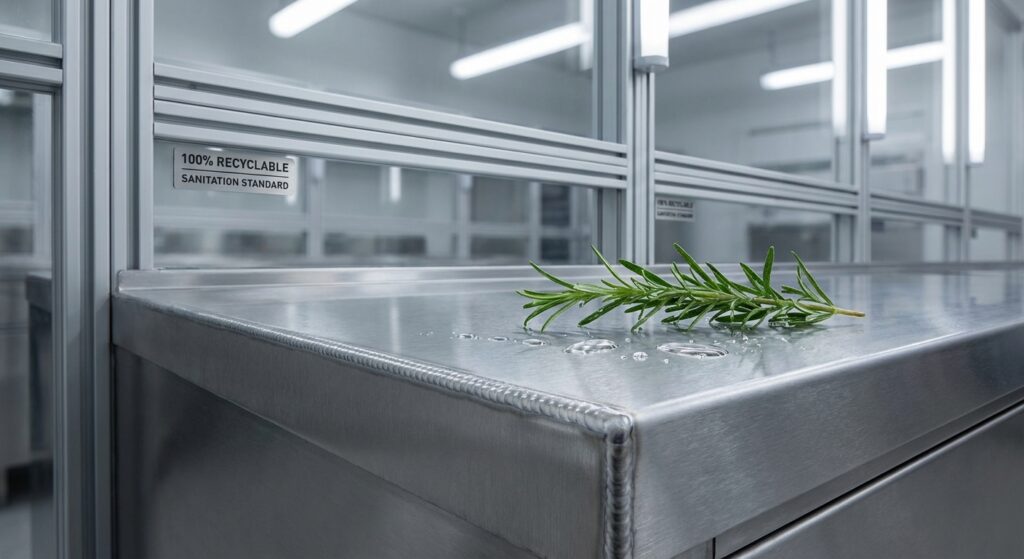
Surface materials in professional residential kitchens employ commercial-grade specifications. Stainless steel work surfaces use 304 or 316 alloy with a minimum 16-gauge thickness, providing resistance to corrosion from acidic ingredients and cleaning chemicals. TIG welding at joints ensures continuous surfaces, free of crevices that harbor bacteria.
Countertop materials must withstand 280°C for areas adjacent to cooking equipment. Engineered quartz composites meet this requirement while providing non-porous surfaces that prevent bacterial colonization. Natural stone options like granite demonstrate adequate thermal properties but require annual sealing to maintain sanitation standards.
Flooring systems must address slip resistance and thermal shock resistance. Porcelain tile with R11 slip rating provides adequate traction in wet conditions. Installation over radiant heating systems requires flexible thin-set mortars that accommodate the thermal expansion coefficients of dissimilar materials.
Specification Trends for 2026-2027
Current project specifications indicate a move toward modular equipment configurations, enabling the phased implementation of AI systems. Clients initially install professional cooking equipment, adding connectivity and automation features in subsequent phases as budgets permit and they gain familiarity with the base equipment.
Hybrid fuel strategies combine induction cooking for precise temperature control with gas burners for high-heat applications. This approach balances performance requirements with infrastructure constraints, as full-gas installations require significant ventilation investment, while all-electric systems may lack the desired cooking characteristics for certain techniques.
Customization extends beyond aesthetic choices to functional programming. Connected Scenarios allows user-defined cooking protocols, equipment response curves, and automation triggers. This customization requires initial commissioning by qualified technicians but provides operational flexibility matching individual cooking preferences and techniques.
The integration of professional equipment and AI systems in residential kitchens represents a technical evolution rather than a stylistic trend. Quantifiable improvements in cooking precision, energy management, and equipment longevity justify increased complexity and installation costs for clients prioritizing culinary performance. Successful implementations require coordination among designers, electrical engineers, HVAC specialists, and automation technicians to deliver integrated systems meeting both aesthetic and functional requirements.