
Why can two Dubai air-conditioning quotations offer the same tonnage yet promise different comfort, noise and running costs? Compare the system boundary, delivered performance and acceptance tests first. A lower price may conceal restricted airflow, incompatible controls, drainage defects or disputed responsibilities.
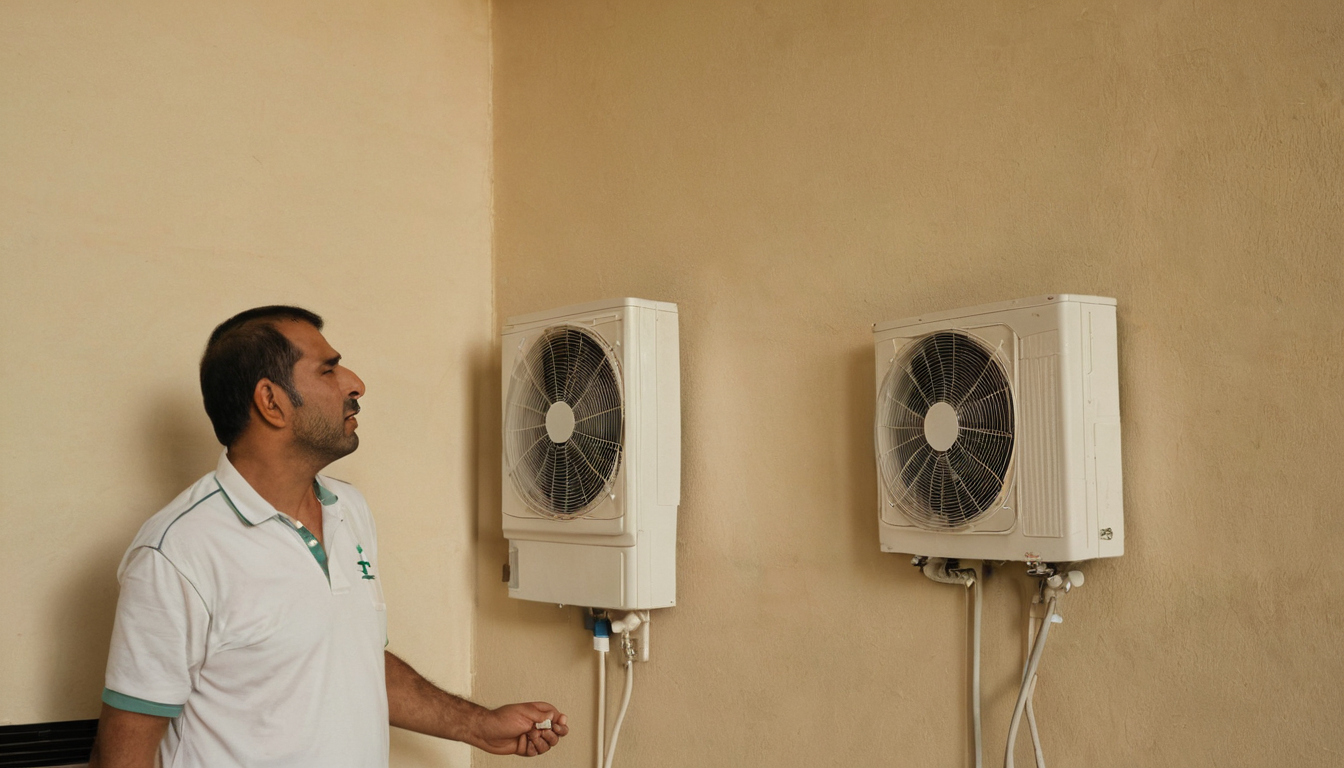
Replacing Home Air-Conditioning in Dubai: Comparing Capacity, Efficiency, Noise, and Controls shown as an editorial planning reference.
The existing Dubai cooling architecture determines what can actually be replaced
Identify whether the home uses direct-expansion equipment, multi-split or VRF equipment, or chilled-water fan-coil units. The architecture determines replaceable assets, approvals, performance measures and contractor responsibilities.
Is the Dubai home cooled by DX equipment, VRF, or chilled-water fan-coil units?
- Record indoor and outdoor units, fan-coil units, valves, meters and controls.
- Compile model numbers, refrigerant, electrical supply, capacity and service history.
- Mark pipes, wiring and controls as private, common or provider-owned.
- Confirm the contractor’s boundary on a drawing or verified field sketch.
Separate fan-coil performance from central chilled-water production. For regulated equipment, request applicable documentation under the Ministry of Industry and Advanced Technology conformity certification process.
Dubai apartment air-conditioning work may require building approval before procurement
Obtain building rules before tendering. Work involving ceilings, risers, façades, common controls or electrical loads may trigger Dubai apartment fit-out permits and NOC requirements. If surrounding work uses paints, cleaning products or finishes, consider pollutant sources identified by the EPA’s VOC guidance.
A cooling-load calculation should determine replacement capacity, not the old unit’s tonnage
Calculate capacity room by room from the envelope, glazing, orientation, occupancy, ventilation, infiltration and comfort targets. Existing tonnage is evidence, not proof, especially where room use or ductwork has changed.
What must a Dubai residential cooling-load report disclose?
Require the calculation method, weather-design source, room sensible and latent loads, and assumptions for construction, glazing, shading, leakage, people, lighting and appliances. Record enclosed balconies, extensions, replacement glazing and changed uses.
Identify the preparer, survey basis, date, exclusions and capacity margin. Any margin needs a stated reason and should not be duplicated during equipment selection.
Nominal capacity and delivered room capacity are not the same specification
Compare exact indoor-outdoor combinations using performance data at stated outdoor and entering-air conditions. Request selected capacity, input power, sensible heat ratio, moisture removal, airflow range and available external static pressure.
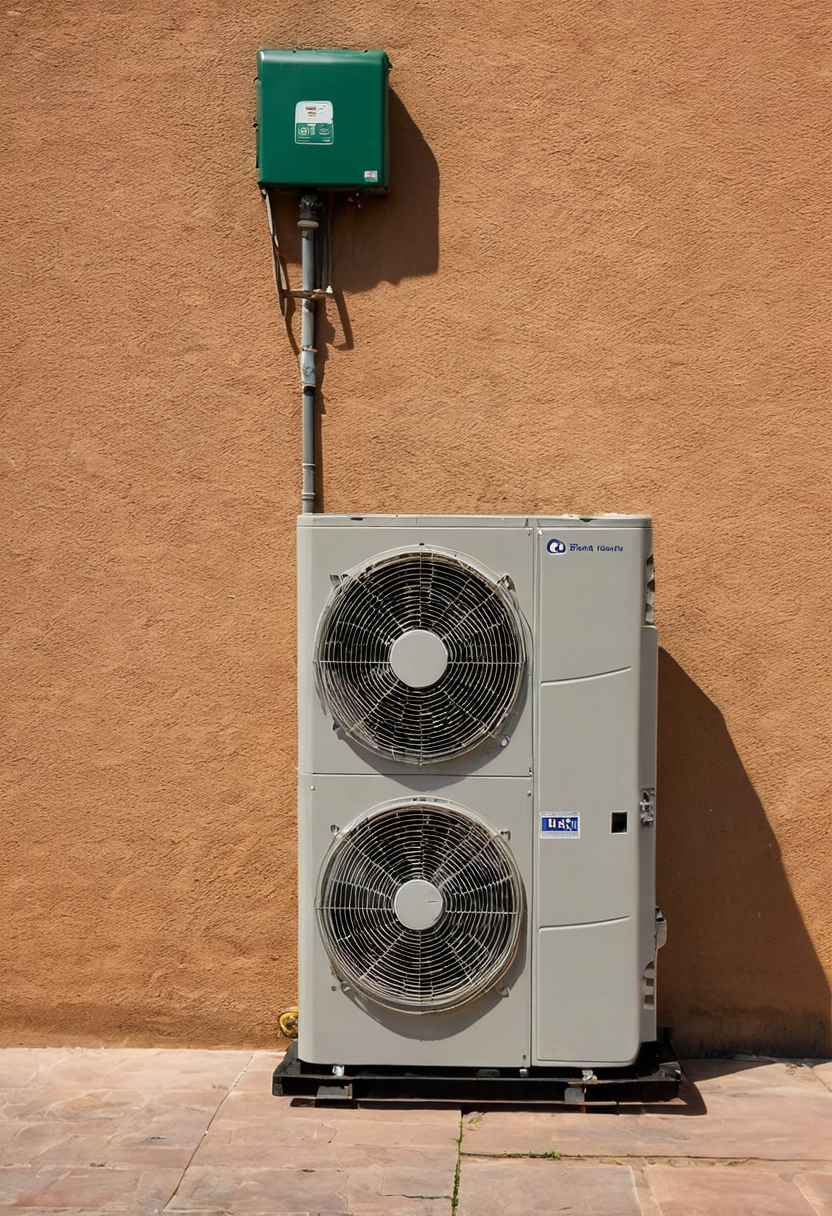
A cooling-load calculation should determine replacement capacity, not the old unit’s tonnage shown with practical context cues.
Verify selection against fan curves, duct resistance and grille capacity. Diagnose condensation rather than masking it with extra tonnage, consistent with EPA moisture-control guidance.
Dubai air-conditioning efficiency must be compared at matched conditions and over the expected ownership period
Compare proposals using the same system boundary, rating basis, capacity point, operating profile, tariff assumptions and maintenance scope. Separate full-load performance, part-load behaviour, fan or pump energy, standby demand and controls.
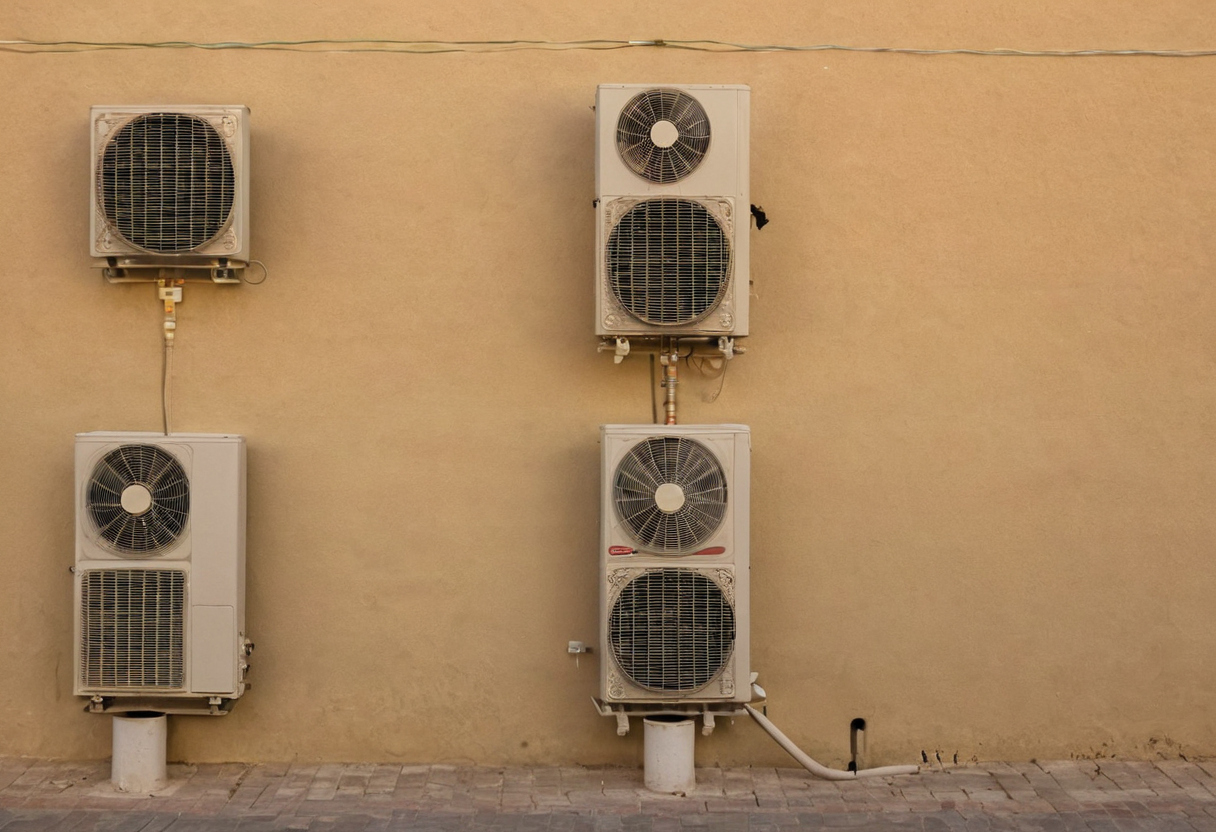
Dubai air-conditioning efficiency must be compared at matched conditions and over the expected ownership period shown with practical context cues.
DX, VRF, and chilled-water proposals require different efficiency evidence
Require exact model combinations, applicable UAE conformity evidence and certified capacity. For DX equipment, record rating conditions, input power and part-load performance. For VRF, add connected units, combination ratio, diversity and piping corrections.
For chilled-water fan coils, specify duty, water temperatures, flow, coil pressure drop, fan power and valve control. Separate fan-coil electricity from district-cooling charges.
Lifecycle cost should test more than the cheapest quotation
Calculate ownership cost from equipment, installation, controls, duct or piping changes, drainage, electrical work, approvals, testing, maintenance and warranty exposure. Apply common operating hours, set-points and current property tariffs.
Noise and controls should be specified at the occupied room, not only at the equipment
Specify acoustic performance where people sleep and work. Equipment ratings alone do not describe sound travelling through ducts, grilles, pipework, walls or supports.

Noise and controls should be specified at the occupied room, not only at the equipment shown as a planning reference for layout, scale, and material decisions.
Equipment sound ratings do not predict bedroom noise without an acoustic path assessment
Request manufacturer sound-power data by speed and octave band. Trace compressors, fans, valves, ducts, grilles and vibration paths. Record isolators, flexible connections, attenuators and the post-installation test method.
Smart thermostats are suitable only when the air-conditioning controls are compatible
Verify compatibility against the exact model and approved gateways. Require wiring diagrams, communication protocol, power supply, zoning sequence and fail-safe behaviour. Confirm available scheduling, humidity, fan and modulation functions, internet dependency, subscriptions and warranty effects.
Ducts, ventilation, condensate, refrigerant, and electrical work can determine replacement performance
Require proposals to state what will be tested, retained, repaired, replaced and excluded. New equipment cannot correct restricted ducts, poor return paths, failed drainage or unsuitable electrical supplies.
Airflow and ventilation must be measured as separate requirements
- Inspect duct dimensions, insulation, leakage, access and available static pressure.
- Measure supply, return, extract and outdoor air before and after replacement.
- Require room readings, identified instruments and balancing tolerances.
Condensate and refrigerant workmanship require documented acceptance tests
- Specify drain gradient, trap, insulation, cleanout and overflow protection, followed by a witnessed water test.
- Record pipe compatibility, pressure testing, vacuum measurement, charging method and leak testing.
- Check cables, breakers, isolators, earthing, fire stopping, access and making good.
The strongest Dubai replacement proposal includes a scored schedule and measurable commissioning results
Select the compliant proposal with the strongest verified outcome, not automatically the lowest price or largest capacity. Score load match, efficiency, acoustics, controls, installation, commissioning, warranty and lifecycle cost.
A like-for-like proposal matrix should expose exclusions and substitutions
Require one schedule covering equipment, controls, ducts, piping, drainage, electrical work, approvals, disposal, testing, making good and taxes. Permit substitutions only with equivalent documented performance.
Commissioning must prove capacity delivery, airflow, drainage, controls, and stable operation
Specify start-up sheets, serial numbers, electrical readings, temperatures, airflow, static pressure and room balancing against design values. Test drainage, safety interlocks, thermostats, zoning, alarms, restart and remote functions. Arrange deferred high-load verification if handover conditions cannot prove peak performance.
Contractor capability and warranty terms should be verified before award
Verify licensing, insurance, subcontractors, manufacturer authorisation, supervision and relevant Dubai references. Record warranty dates, labour, parts, exclusions, registration duties, response responsibilities and maintenance conditions.
Frequently asked questions
Can the same nominal tonnage be installed without a new load calculation?
The old capacity can guide investigation but does not prove the replacement selection. Require a room-by-room calculation where the envelope, use, ventilation or previous performance has changed.
How much does residential air-conditioning replacement cost in Dubai?
Cost depends on architecture, capacity and scope. Require itemised equipment, controls, ductwork, piping, drainage, electrical work, approvals, testing, disposal, making good and taxes.
Is the HVAC “$5,000 rule” relevant in Dubai?
No universal Dubai decision follows this US shortcut. Compare repair cost, equipment condition, efficiency, refrigerant availability, warranty and expected ownership.
Should the HVAC “20 rule” influence the decision?
Treat age-and-repair formulas as screening prompts, not award rules. Use a condition assessment and lifecycle comparison.
Is an inverter or variable-speed system always more efficient and quieter?
No. Benefits depend on sizing, part-load performance, minimum modulation, controls, airflow and installation.
Change the procurement decision: award against documented room performance, complete scope and commissioning evidence rather than brand, nominal tonnage or headline price.