
What exactly are you approving when a lighting proposal looks attractive on paper? Wattage, fixture count and phrases such as “warm, soft and glare-free” cannot prevent a bright reflection on the television, a dark kitchen worktop or visibly mismatched LEDs. Approval should rest on measured visual performance.
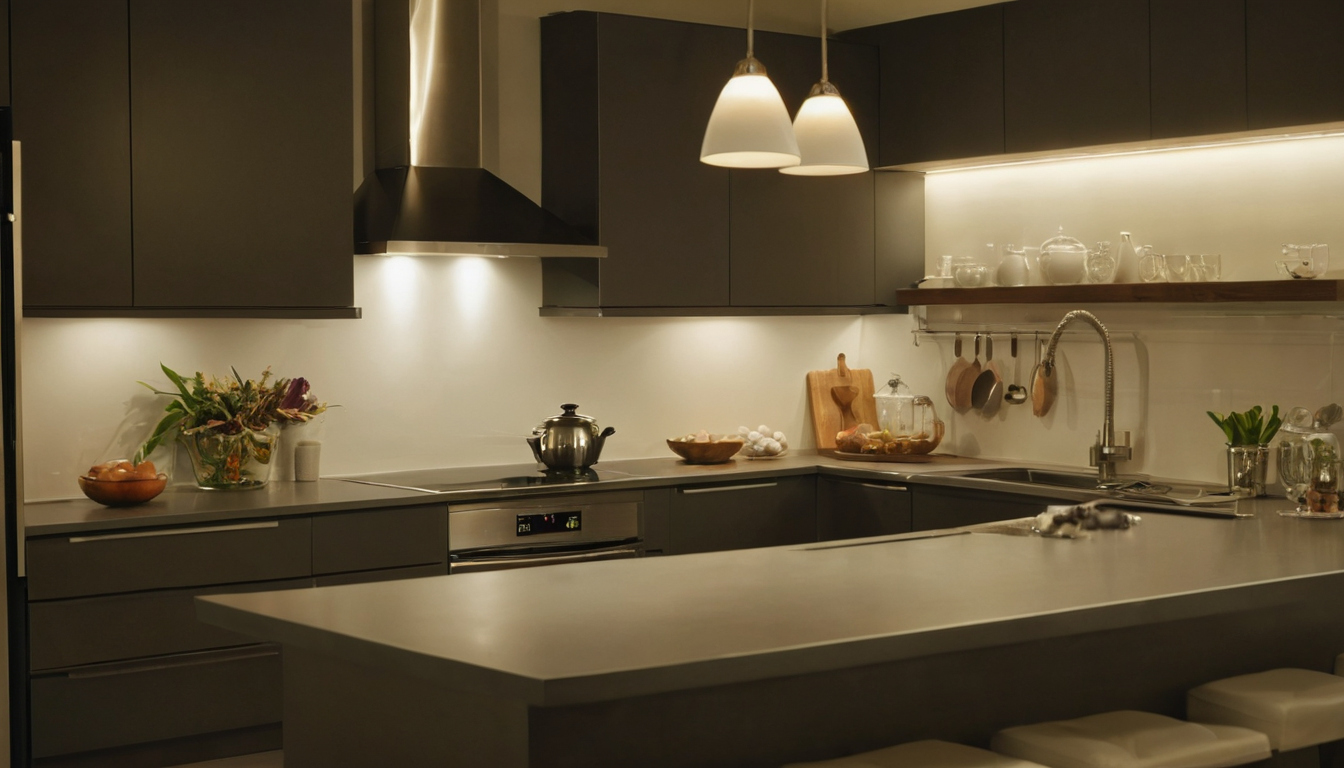
How to Specify Apartment Lighting in Dubai Without Creating Glare or Uneven Colour shown with practical context cues.
What must a Dubai apartment lighting brief specify before fixtures are approved?
A Dubai apartment lighting brief must set room-specific acceptance criteria for illuminance, uniformity, glare, colour, beam distribution, dimming and commissioning, based on actual geometry, finishes, furniture and viewing positions.
Residential lighting performance must be defined by room and task
Kitchen worktops, dining tables, reading seats, mirrors and circulation routes need distinct measurement planes. Coordinate task lighting with residential kitchen planning and equipment, then record ceiling height, glazing, curtains, screens, polished finishes and fixed joinery.
| Room/task | Measurement plane | Performance criterion | Glare viewpoint | Colour/control requirement | Required evidence |
|---|---|---|---|---|---|
| Kitchen preparation | Finished worktop | Maintained illuminance and uniformity | Standing at counter | Material rendering and task control | Calculation and sample |
| Living and reading | Book, table and floor | Scene-specific light and contrast | Seated and reclined | Matched colour and stable dimming | Photometry and mock-up |
| Bathroom mirror | Face and basin | Vertical light without harsh shadow | Standing at mirror | Consistent colour at low output | Sample and commissioning record |
A lighting brief must distinguish design intent from contractor deliverables
“Soft” is a preference; shielding, beam distribution and a passed viewpoint test are deliverables. The designer sets criteria, the supplier provides verified photometric and driver data, and the contractor supplies exact samples and commissioning records. Visual approval remains separate from Dubai apartment fit-out permits and NOC requirements.
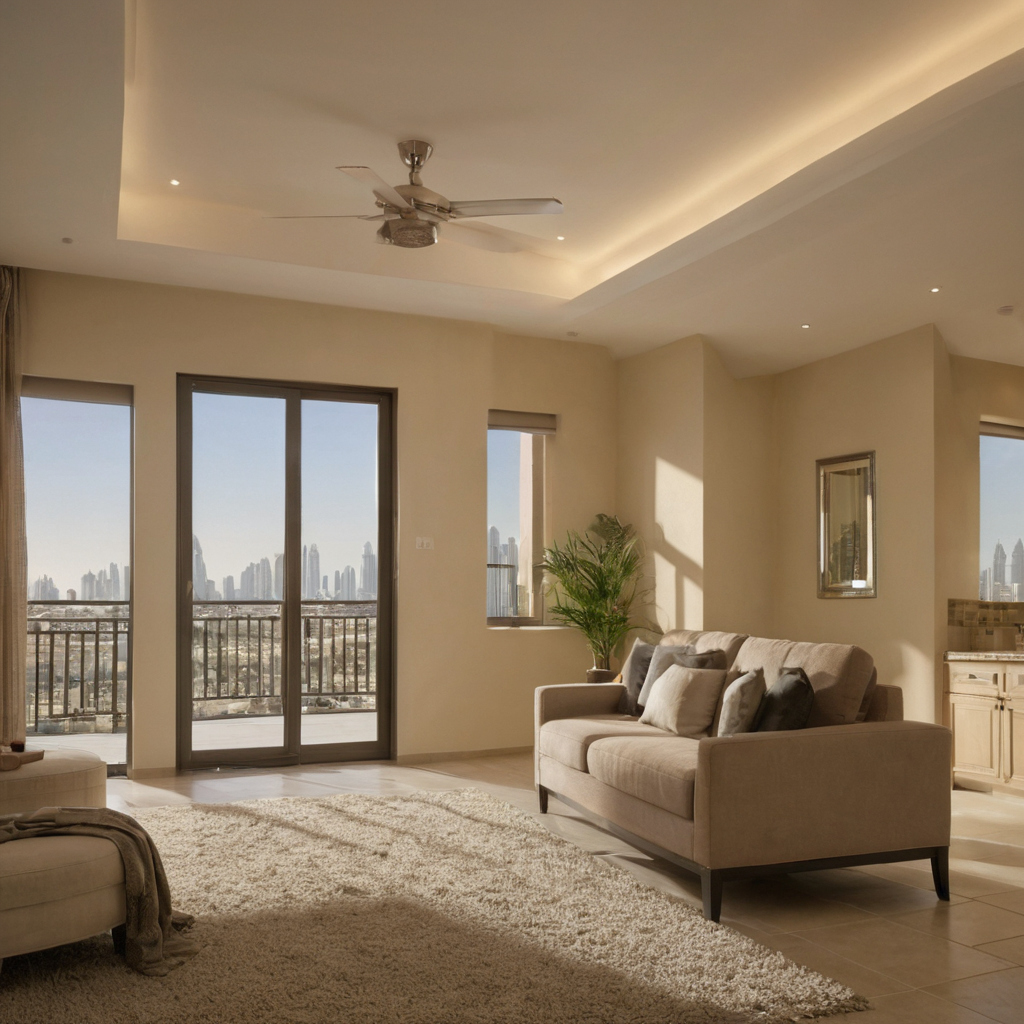
What must a Dubai apartment lighting brief specify before fixtures are approved shown with practical context cues.
Other requirements must not become false lighting proxies. ENERGY STAR states that qualified LEDs use at least 75 percent less energy and last up to 25 times longer than incandescent lighting, but efficiency does not prove glare or colour performance. For private collections, the National Park Service Museum Handbook provides preservation and documentation guidance. The EPA identifies paints, varnishes, waxes, cleaning products, building materials and furnishings as common indoor VOC sources. The Natural Stone Institute recommends neutral cleaners, stone soap or mild detergent with warm water and warns that abrasive powders or creams can scratch stone. The 2010 ADA Standards specify a 30 by 48 inch wheelchair clear space where that accessible-design reference applies.
How should illuminance and uniformity be specified for each apartment room?
Specify maintained illuminance on a named measurement plane, then set project-specific uniformity criteria using current SLL or CIE guidance, documented tasks and actual reflectances.
Average lux alone does not prove that an apartment is evenly lit
- Define maintained lux: state expected performance after lumen depreciation, dirt and the documented maintenance cycle.
- Name the plane: identify grid height and spacing for floors, worktops, tables, mirrors and artwork. Where the US accessible reference applies, relevant dining and work surfaces sit 28 to 34 inches above the floor.
- Report the spread: require average, minimum and maximum lux plus the chosen uniformity ratio.
- Separate scenes: calculate circulation, preparation, reading, grooming, dining and television viewing independently.
Reflectance and ceiling height change the result even when fixture output is unchanged
Calculations should use surveyed mounting heights, obstructions and documented surface reflectances. Pale finishes increase inter-reflection; dark finishes can reveal weak beam overlap. Once the lux pattern passes, inspect glare from real eye positions.
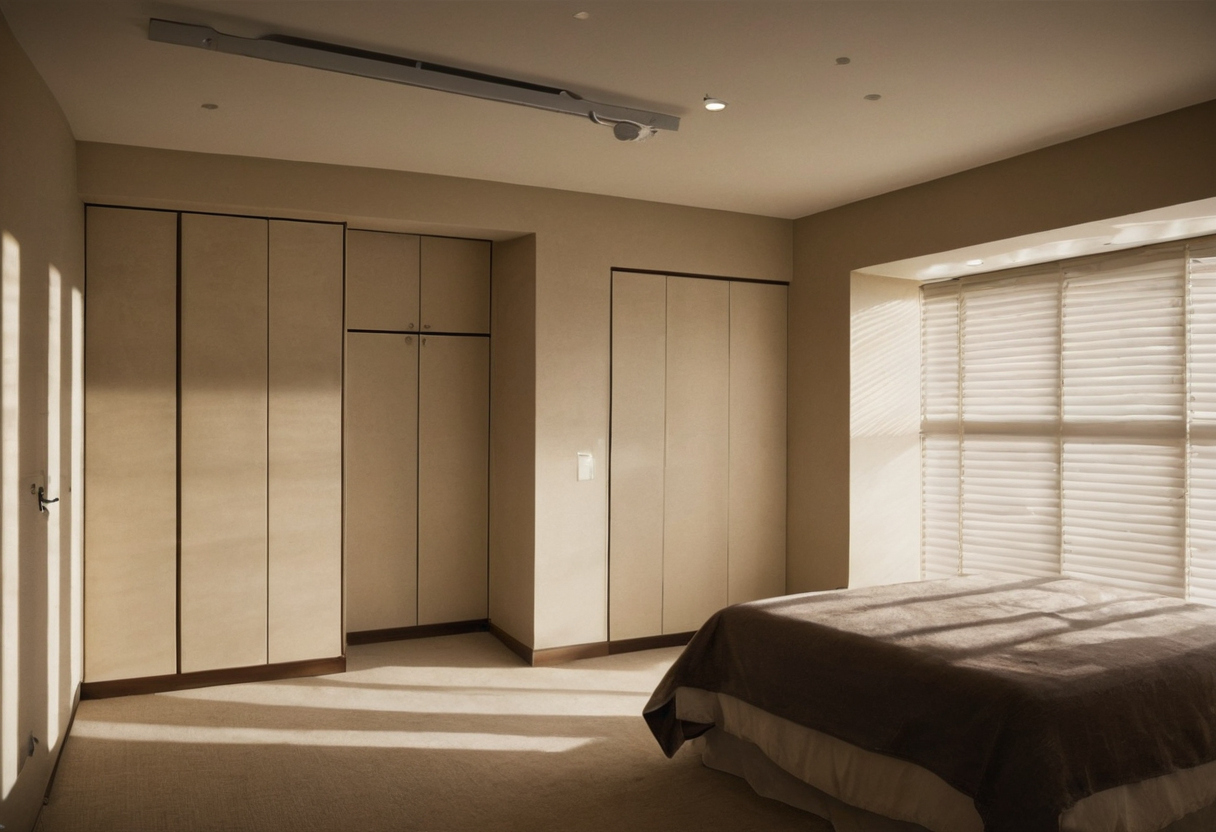
How should illuminance and uniformity be specified for each apartment room shown with finish, fixture, and clearance relationships visible.
Glare control in a Dubai apartment must be checked from real viewing positions
A “low-glare” label cannot establish comfort. The brief must define critical sightlines and require suitable recess, shielding, luminance control and aiming, supported by calculations and a full-scale mock-up.
UGR is not a universal pass-or-fail test for residential glare
The Unified Glare Rating method works under defined room, observer and luminaire conditions. A catalogue UGR table does not automatically represent decorative pendants, linear profiles, small rooms or changing residential viewpoints.
- Mark eye positions at sofas, desks, dining chairs, beds and circulation routes.
- Identify visible downlights, pendants and linear sources along each sightline.
- Request cut-off, shielding, recess, diffuser and aiming information.
- Reject any fitting that exposes a bright LED image from a normal position.
Reflected glare must be checked on televisions, mirrors and polished finishes
Inspect televisions, mirrors, glazed artwork and polished worktops in every scene. Lowering general light may leave the reflection intact while making contrast more uncomfortable. Fix screen and furniture positions before aiming, then record objectionable reflections and corrected limits.
If paints, coatings or other VOC-emitting products remain in use during a mock-up, the US Environmental Protection Agency recommends increased ventilation. That safety step is separate from the glare test.
Glare control in a Dubai apartment must be checked from real viewing positions shown with practical context cues.
How should colour temperature, rendering and consistency be written into the fixture schedule?
State nominal CCT by zone, permitted variation, colour-consistency tolerance, rendering criteria and dimming behaviour. Equal catalogue labels do not guarantee an equal appearance.
Nominal CCT does not guarantee that adjacent luminaires will match
Require an SDCM or MacAdam-step limit, production-batch records and confirmation that future modules can match the installation. Specify whether each fitting remains fixed-CCT, dims to warm or forms part of a tuneable-white system, then test its full dimming range.
Colour rendering must be assessed against the apartment’s actual materials
Set minimum CIE Ra, any relevant saturated-red criterion and the applicable test method. Request TM-30 fidelity and gamut data where finish accuracy matters. Review paint, stone, timber, artwork, food, skin tones and how textile colour and texture shape an interior under proposed daytime, evening and dimmed scenes.
Fixture substitutions are acceptable only when photometry, colour and controls remain equivalent
Reject a substitution unless it reproduces the approved visual and operational result, not merely wattage, cut-out or nominal CCT.
Photometric files must be recalculated rather than accepted as catalogue attachments
Require native IES or LDT files tied to identified test data. Recalculate the substitute in the original apartment model using identical geometry, mounting heights, reflectances and maintenance assumptions.
- Pass: comparative results preserve illuminance, uniformity and beam distribution.
- Reject: the submission contains only catalogue beam angles or PDF attachments.
Driver and control compatibility must be proven as a complete system
Identify the exact driver, dimmer, interface, protocol and circuit-load range. A witnessed sample test should cover low-end stability, pop-on, dropout, shimmer, flicker and noise. Compare complete installed costs, warranty, replacement modules, UAE availability and lead time before approval.
A full-scale lighting mock-up and commissioning record should control final acceptance
Final approval should depend on a representative installed mock-up and documented night-time commissioning, completed before repeated installation makes correction expensive.
The apartment lighting mock-up must reproduce the most demanding condition
Select the area by risk rather than convenience. Reproduce the critical sightline, shallow ceiling detail, reflective finish or mixed luminaire group with the proposed finishes, drivers and controls. Agree pass, amend or reject criteria before testing.
Commissioning must leave measurable records for future replacement and adjustment
Commission after curtains, furniture, artwork and finishes are installed. Record the calibrated meter, measurement grid, lux results, glare positions, colour mismatch, aiming and scene settings.
- Record fixture, driver and control model numbers.
- Test relevant arrival, task, dining, television, night and cleaning scenes.
- Log low-end dimming, pop-on, dropout, flicker and response.
- Handover circuit schedules, aiming angles, photographs and replacement details.
Approve measured performance and recorded settings, not an attractive sample seen once.
Frequently asked questions
What is the 5-foot-7 lighting rule, and is it reliable for pendant placement in a Dubai apartment?
The rule is only a rough visual reference for pendant height. Ceiling height, table level, occupant sightlines, beam spread and glare determine the correct project position.
How can apartment lighting avoid glare without making rooms feel too dark?
Use shielding, controlled beams, indirect light and task lighting rather than reducing every circuit equally. Balanced surface brightness matters more than one high or low lux figure.
What are the four lighting layers, and does every apartment room need all four?
The common layers are ambient, task, accent and decorative light. A room needs only the layers that support its tasks, visual hierarchy and scenes.
Why can two LED fixtures with the same stated colour temperature look different?
Chromaticity tolerance, production batch, optical materials, colour-rendering characteristics and dimming behaviour can differ despite matching nominal CCT labels.
What should be tested in a lighting mock-up before every fixture is installed?
Test maintained light levels, beam overlap, direct and reflected glare, material colour, adjacent-source matching, aiming, every control scene and low-end dimming behaviour.